Redness Guide · Apgujeong, Gangnam Seoul
Sylfirm X vs Vbeam: Which Approach May Help Persistent Facial Redness?

Quick answer
Vbeam is a pulsed dye laser (595 nm) that targets haemoglobin in visible blood vessels, so it is a well-established option for diffuse redness, broken capillaries and rosacea-related redness. Sylfirm X is RF microneedling with a pulsed mode aimed at abnormal vessels in the upper dermis, and it is often discussed for redness combined with texture, post-acne marks or melasma-associated vessels. Vbeam has the larger evidence base for vascular redness; Sylfirm X evidence is newer and smaller.
Results and recovery vary between individuals.
What causes persistent facial redness?
Redness that does not settle can have several causes: rosacea, visible broken capillaries (telangiectasia), post-acne redness, sensitised or damaged skin barrier, or sun damage. Rosacea often has triggers such as heat, alcohol, spicy food and stress. Treating triggers, skin barrier and inflammation is usually part of the plan alongside any device.
How do Sylfirm X and Vbeam work?
Vbeam emits a 595 nm wavelength absorbed by haemoglobin. The energy heats and damages small abnormal vessels, which the body then clears. Settings can be adjusted to avoid bruising (purpura-free) or to treat more aggressively with temporary bruising for stronger results.
Sylfirm X inserts fine needles into the skin and delivers radiofrequency, with a pulsed-wave mode designed to act on abnormal vessels and the basement membrane in the upper dermis. It also stimulates collagen, so it is sometimes chosen when redness, texture and pigment occur together. This article describes both devices as general information; ask your doctor which approach suits the cause of your redness.
Sylfirm X vs Vbeam: side-by-side comparison
| Sylfirm X | Vbeam | |
|---|---|---|
| Mechanism | Pulsed RF via microneedles; vessel and dermal remodelling | 595 nm pulsed dye laser absorbed by haemoglobin |
| Depth / target | Upper dermis vessels and basement membrane | Superficial vessels and diffuse redness |
| Typical sessions | Often 3–5, a few weeks apart | Often 2–5, about 4 weeks apart |
| Downtime | Redness, pinpoint marks for 1–2 days | Redness and swelling; bruising for up to 7–10 days on stronger settings |
| Results timeline | Gradual over the course | Gradual; often visible after each session |
| Best for | Redness with texture, post-acne redness, melasma-related vessels | Rosacea redness, broken capillaries, diffuse flushing |
Which may help persistent redness more?
For classic vascular redness such as rosacea and visible capillaries, pulsed dye laser has been studied for decades and is considered a standard option. For redness mixed with acne marks, uneven texture or pigmentation, RF microneedling with a vascular mode may address more than one concern, though published studies are mostly small. Many dermatologists choose based on what else is going on in the skin rather than redness alone.
Neither device cures rosacea. Daily sunscreen, gentle skincare and medical treatment of flares remain essential.
What are the risks?
Sylfirm X
- Redness, swelling and small needle marks
- Rarely, infection or pigment change
- Not ideal during an active acne or rosacea flare
Vbeam
- Swelling and possible bruising (purpura)
- Rarely, blisters, scarring or pigment change
- Less suitable on tanned or very dark skin
What alternatives exist for facial redness?
Depending on the cause, other approaches include barrier-repair skincare, prescription topicals or oral medication for rosacea, skin-calming boosters such as Rejuran for sensitised skin, and RF microneedling such as Potenza when texture is a main concern. No reliable public per-session average was found for Sylfirm X or Vbeam in Seoul; available reports are mostly package totals. Cost is driven mainly by the number of sessions needed, the size of the area, the device settings used and whether the price includes VAT, so ask for an itemised quote at consultation.
Which should you choose?
- Rosacea redness or visible capillaries on lighter skin: pulsed dye laser is a well-established option.
- Redness plus texture, post-acne marks or melasma: a vascular RF microneedling approach may be discussed.
- Sensitive, flushing skin: start with barrier care and medical control of flares before devices.
Frequently asked questions
Is Vbeam good for rosacea?
Pulsed dye laser is a widely used and studied option for rosacea redness and visible vessels, though rosacea itself is chronic and can recur.
Can Sylfirm X treat broken capillaries?
It may help some fine redness, but distinct visible capillaries are more commonly treated with vascular lasers.
How many sessions are needed for redness?
Often three to five sessions a few weeks apart, depending on the cause and severity.
Will I bruise after Vbeam?
It depends on settings. Gentler settings aim to avoid bruising, while stronger settings may cause bruising for about a week or more.
Can redness come back after treatment?
Yes. New vessels can form, especially with triggers and sun exposure, so maintenance and trigger control matter.
Get a redness assessment in Apgujeong, Gangnam Seoul
Send a makeup-free photo of your redness and your travel dates, and our English-speaking team will arrange a free consultation in Apgujeong.
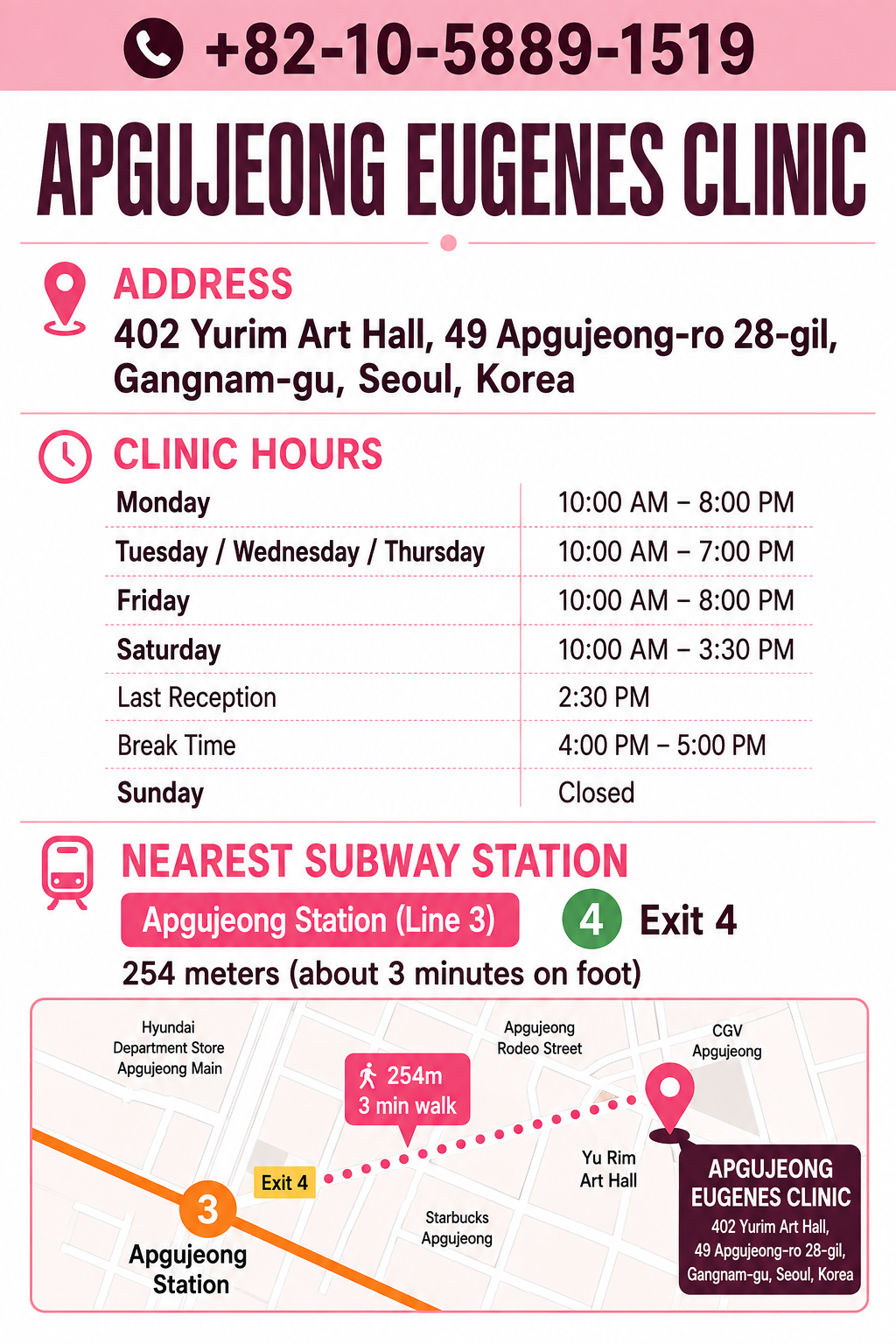
Chat on WhatsApp 402, Yurim Art Hall, 49 Apgujeong-ro 28-gil, Gangnam-gu, Seoul · Apgujeong Station (Line 3) Exit 4 · +82-10-5889-1519 (WhatsApp)