Comparison Guide · Apgujeong, Gangnam Seoul
PRP vs Rejuran for Skin Rejuvenation: What Does the Evidence Say?

Quick answer
PRP uses platelets concentrated from your own blood, which release growth factors that may support collagen and skin repair. Rejuran uses purified polynucleotides from salmon-family DNA to support repair and hydration. Evidence for both is encouraging but limited: studies are mostly small, short and use varying protocols. Rejuran offers a standardised product; PRP quality varies with preparation method. Both typically need a short course and cause a few days of bumps or bruising.
Results and recovery vary between individuals.
How do PRP and Rejuran work?
PRP (platelet-rich plasma) is made by drawing a small amount of blood, spinning it in a centrifuge and collecting the plasma with a high concentration of platelets. When injected or applied with microneedling, platelets release growth factors such as PDGF, TGF-beta and VEGF, which are thought to stimulate fibroblasts and support repair.
Rejuran Healer contains polynucleotides (PN), DNA fragments purified from salmon-family fish. PN is thought to support cell activity and skin repair, reduce inflammation and improve hydration. It is injected into the superficial dermis in many small points. See the Rejuran page.
What does the evidence say?
PRP: Studies, including some split-face trials, suggest PRP may improve skin texture, fine lines and under-eye appearance, and it is more firmly supported for hair loss. However, systematic reviews note that preparation methods, platelet concentration and treatment schedules vary widely, making results difficult to compare. Outcomes can also vary with the patient's own platelet quality.
Rejuran / polynucleotides: Clinical studies, largely from Korea and Italy, report improvements in elasticity, hydration and wrinkles after a series of injections. These are also mostly small and short-term, and some are industry-linked. Because the product is standardised, results may be more consistent between clinics.
When reading claims about either treatment, look for whether a study had a control group, how results were measured (photos, devices or patient ratings) and how long patients were followed. Many marketing claims rely on before-and-after photos, which are affected by lighting, makeup and natural variation.
In short, neither has large, long-term trials, so both should be seen as reasonable options with modest, gradual benefits rather than proven transformations.
PRP vs Rejuran: side-by-side comparison
| PRP | Rejuran Healer | |
|---|---|---|
| Mechanism | Growth factors from concentrated platelets | Polynucleotides support repair and hydration |
| Depth / target | Dermis, by injection or with microneedling | Superficial dermis by injection |
| Typical sessions | Often 3, about 4 weeks apart | About 3, 2–4 weeks apart |
| Downtime | Redness, swelling or bruising for 1–3 days | Bumps and redness for 1–2 days |
| Results timeline | Gradual over weeks to months | Gradual over 4–8 weeks |
| Consistency | Varies with preparation and patient | Standardised product |
| Best for | People preferring an autologous option | Thin, dry, sensitive or tired-looking skin |
Who should be cautious?
PRP
- Low platelet count or platelet disorders
- Anticoagulant therapy
- Active infection or certain cancers
- Fear of blood draws
Rejuran
- Fish or salmon allergy
- Active infection or inflammation in the area
- Pregnancy or breastfeeding
- Easy bruising or blood thinners
How much do PRP and Rejuran cost in Seoul?
In Seoul, Rejuran Healer 2 cc typically costs about ₩200,000–₩400,000, and PRP for the face about ₩100,000–₩300,000 per session (indicative 2026 ranges; prices vary by clinic, product, event pricing and VAT).
| Option | Typical Seoul range (KRW) |
|---|---|
| Rejuran Healer · 2 cc | about ₩200,000–₩400,000 |
| Rejuran Healer · 4 cc | about ₩300,000–₩500,000 |
| Rejuran HB Plus · per 1 cc | about ₩150,000–₩330,000 |
| PRP · face, per session | about ₩100,000–₩300,000 |
The PRP range is based on limited data. For both, the total depends on the number of sessions in the course and the amount injected each time; PRP cost can also vary with the preparation system used.
Ranges are indicative market figures from public price-comparison sources as of October 2026; the final quote depends on the clinic, product or device, quantity and VAT.
Which should you choose?
- Prefer a standardised, ready-made product: Rejuran.
- Prefer an option made from your own blood: PRP, where offered, accepting more variability.
- Want something related but different: PDRN injections are another DNA-derived option; see the PDRN guide.
Whichever you choose, judge results after a full course and with consistent photos, since changes are gradual.
Frequently asked questions
Is PRP or Rejuran more effective?
There are no large head-to-head trials. Both show modest benefits in small studies, and suitability depends on your skin and preferences.
Is Rejuran safe if I am allergic to fish?
Tell your doctor about any fish allergy before treatment, as Rejuran is derived from salmon-family DNA.
Why do PRP results vary?
Platelet concentration and preparation methods differ between systems and patients, which affects the growth factors delivered.
How many Rejuran sessions do I need?
Commonly about three sessions two to four weeks apart, then maintenance as needed.
What is the downtime for Rejuran?
Small raised bumps and redness typically settle in one to two days; bruising may last longer.
Discuss skin rejuvenation in Apgujeong, Gangnam Seoul
Send a daylight photo and your travel dates, and our English-speaking team will arrange a free consultation in Apgujeong to discuss regenerative skin options.
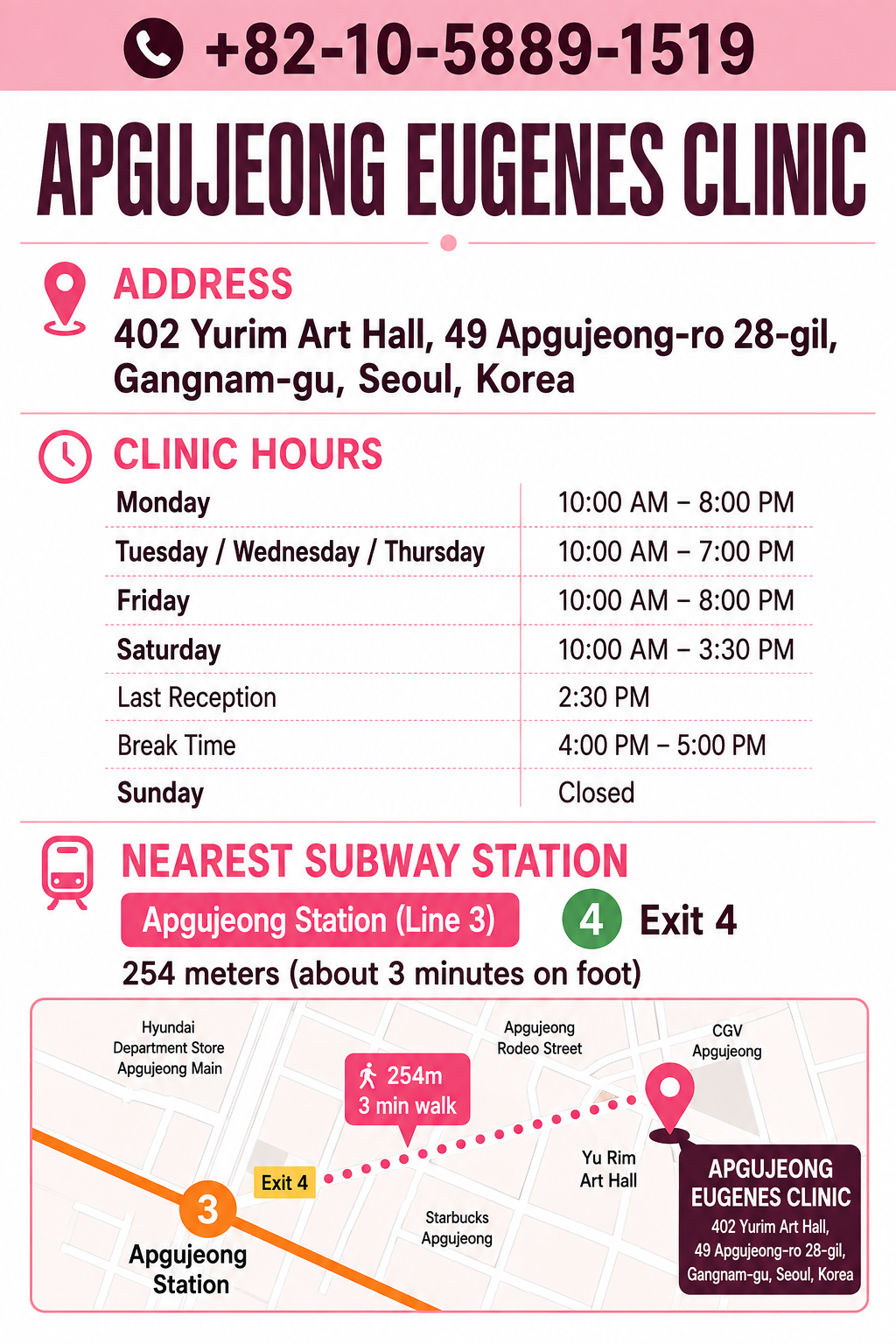
Chat on WhatsApp 402, Yurim Art Hall, 49 Apgujeong-ro 28-gil, Gangnam-gu, Seoul · Apgujeong Station (Line 3) Exit 4 · +82-10-5889-1519 (WhatsApp)