Laser Guide · Apgujeong, Gangnam Seoul
Laser Toning for Sensitive Skin: Safety and Treatment Planning
Quick answer
Laser toning uses a low-energy laser passed evenly over the face to gradually reduce dullness and uneven pigment. Because energy is low, it is often considered for sensitive skin, but sensitive skin still needs cautious settings, wider spacing and barrier care. Overly frequent or strong toning has been linked to mottled light spots (hypopigmentation) and rebound pigmentation. Active rosacea flares, eczema or a damaged barrier should usually be calmed first.
Results and recovery vary between individuals.
What is laser toning?
Laser toning usually refers to a low-fluence 1064 nm Q-switched or picosecond laser passed several times over the whole face. Instead of targeting individual spots aggressively, it aims to break down fine melanin gradually, which can make skin tone look clearer and more even over a course of sessions. It became popular in Asia for melasma-prone and generally uneven skin.
Evidence from studies is mostly from small trials and case series. Results tend to be modest and gradual, and pigment such as melasma can return after stopping.
Is laser toning safe for sensitive skin?
"Sensitive skin" can mean very different things – easy flushing, rosacea, eczema, a damaged barrier from over-exfoliation, or reactive melasma. Laser toning can be gentle enough for many of these, but the risks are real:
Why it may suit sensitive skin
- Low energy and no breaking of the skin surface
- Usually only brief redness
- No numbing cream typically needed
Risks to watch for
- Redness, stinging or flushing that lasts longer than expected
- Mottled hypopigmentation with too-frequent sessions
- Rebound darkening in melasma-prone skin
- Triggering rosacea or eczema flares
How should treatment be planned for sensitive skin?
- Identify the type of sensitivity. Rosacea, dermatitis and barrier damage are managed differently.
- Calm the skin first. Repairing the barrier with gentle skincare, and treating active inflammation, often comes before any laser.
- Start low. Conservative energy and fewer passes in the first session to test response.
- Space sessions wisely. Many doctors use 2–4 week intervals for sensitive skin rather than weekly treatments.
- Review regularly. Photos at intervals help catch early signs of white spots or rebound pigment.
Who should avoid or postpone laser toning?
- Active rosacea flare, eczema or sunburn on the face
- Recent strong peels, retinoid irritation or over-exfoliation
- Pregnancy (many clinics postpone elective lasers)
- Photosensitising medicines or recent isotretinoin – discuss timing with your doctor
- Recent tan or planned heavy sun exposure soon after
What are gentler alternatives or add-ons?
For sensitive skin, a plan may combine or substitute toning with barrier-supporting treatments. Polynucleotide boosters such as Rejuran and PDRN injections are often used to support skin recovery and resilience, though they do not remove pigment on their own. Topical options such as tranexamic acid or azelaic acid, and strict sun protection, remain foundational.
Laser toning is not offered at every clinic, so discuss which pigment and redness options are available at your consultation.
How many sessions does laser toning need, and how long do results last?
Toning is a gradual treatment. Many plans involve about 5–10 sessions, though sensitive skin may be treated less often and with fewer total sessions. Some people notice brighter skin after the first few visits; uneven pigment typically improves more slowly.
Results are not permanent. Sun exposure, hormones and inflammation can bring pigment back, particularly melasma. A practical approach is to treat until the skin reaches a comfortable level, then maintain with sunscreen, topical care and occasional sessions rather than continuing frequent toning indefinitely. If you notice white spots, increased redness or darker patches, stop and have the plan reviewed.
Aftercare and cost considerations
After toning, use a simple routine: gentle cleanser, fragrance-free moisturiser and broad-spectrum sunscreen. Avoid exfoliating acids, scrubs and retinoids for a few days, and skip saunas for 24 hours.
In Seoul, a laser toning (Nd:YAG) session typically costs about ₩30,000–₩100,000, and a 10-session course about ₩150,000–₩700,000 (indicative 2026 ranges). Cost depends on the device, the number of sessions and whether it is combined with other treatments; a quote is confirmed at consultation.
Ranges are indicative market figures from public price-comparison sources as of October 2026. The final quote depends on the clinic, the product or device, the quantity and VAT.
Frequently asked questions
Can I do laser toning if I have rosacea?
Sometimes, but active flares are usually calmed first, and some people with rosacea are better suited to vascular-focused treatments.
How often should sensitive skin have laser toning?
Many doctors space sessions about 2–4 weeks apart for sensitive skin, adjusting to how the skin responds.
Can laser toning cause white spots?
Yes, mottled hypopigmentation has been reported, mainly with frequent or high-energy sessions. Careful planning reduces the risk.
Is there downtime?
Usually only brief redness for a few hours. Sensitive skin may stay pink a little longer.
Does laser toning cure melasma?
No. It may lighten melasma for some people, but relapse is common and maintenance with sun protection and skincare is needed.
Plan gentle skin care in Apgujeong, Gangnam Seoul
Tell us about your skin sensitivity and send a makeup-free photo on WhatsApp. An English-speaking consultation will suggest a cautious, suitable plan.
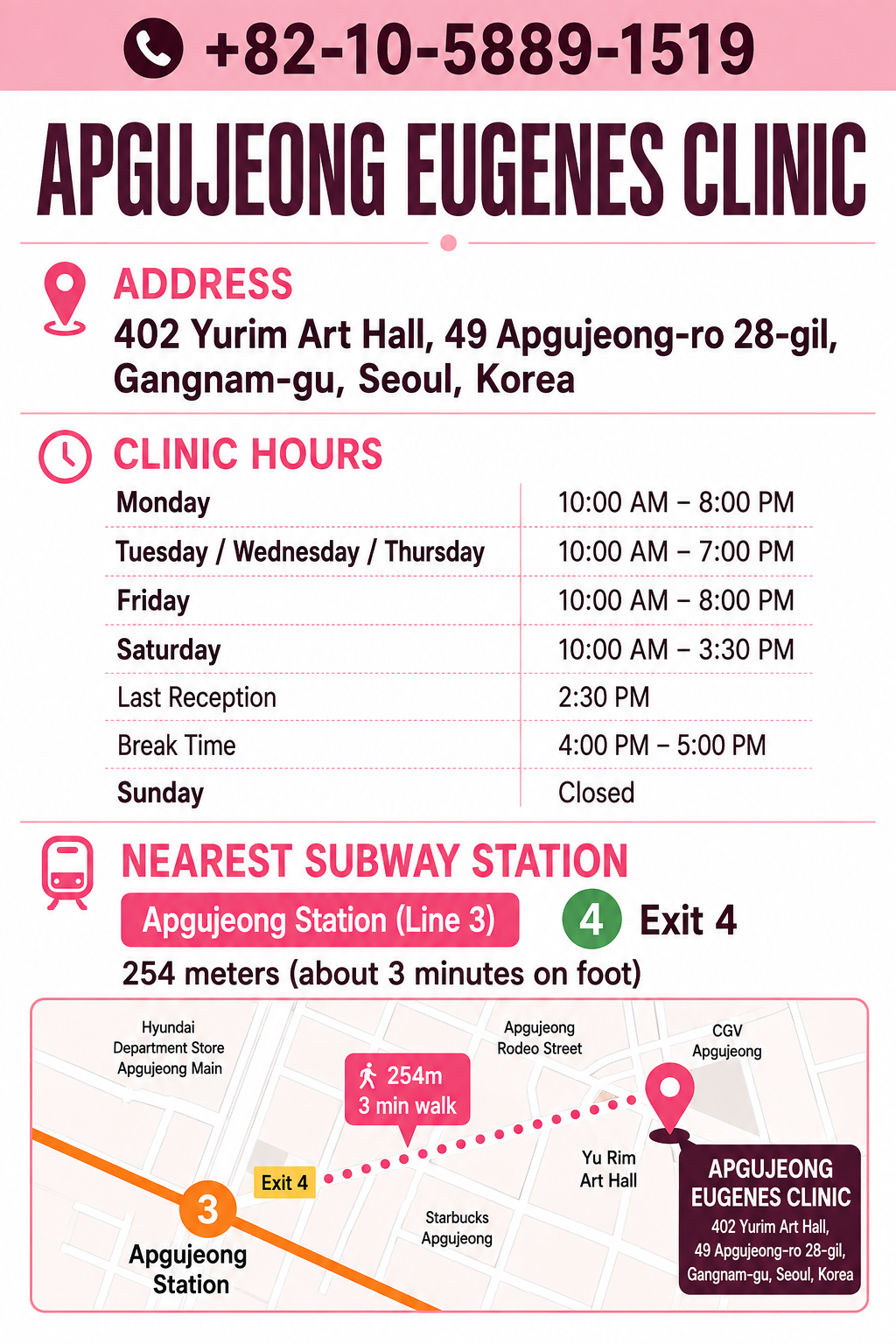
Chat on WhatsApp 402, Yurim Art Hall, 49 Apgujeong-ro 28-gil, Gangnam-gu, Seoul · Apgujeong Station (Line 3) Exit 4 · +82-10-5889-1519 (WhatsApp)